Menswear / Formal Trousers The Trouser Engineering Lab Sheet 04 / 10
Options Mall logo Options Mallformalpantsnearme.com

Sheet 04 · Construction & detailsHow men's formal trousers are made.

A pair of formal trousers is assembled from many separate pieces and a long sequence of small decisions. This sheet takes the ten construction details that matter most — from the waistband to the final pressing — and explains what each one does for the way a trouser looks and the way it works.

Details
10
Assemblies
04
Reference photographs
06
Scope
General construction — not a specification of the trousers shown
§ 02Exploded view · DWG CN-04

Ten details, pulled apart.

An exploded drawing separates a trouser into its parts so that each one can be named. Select any detail in the index to jump to its sheet.

Exploded technical drawing of formal trousers with ten numbered construction details 01 05 10 03 09 06 04 07 08 02
DWG CN-04 — Exploded front viewNot to scale
  1. 01WaistbandWaist & front
  2. 02Front closureWaist & front
  3. 03PleatsWaist & front
  4. 04PocketsPockets & belt
  5. 05Belt loops & side adjustersPockets & belt
  6. 06CreasesThe leg line
  7. 07SeamsThe leg line
  8. 08HemsThe leg line
  9. 09StitchingStitch & finish
  10. 10FinishingStitch & finish
§ 03Waist & front · D.01–03

The waist assembly.

Three details decide how the top of a trouser behaves: the band that anchors it, the closure at its centre and the fullness — or flatness — released below it.

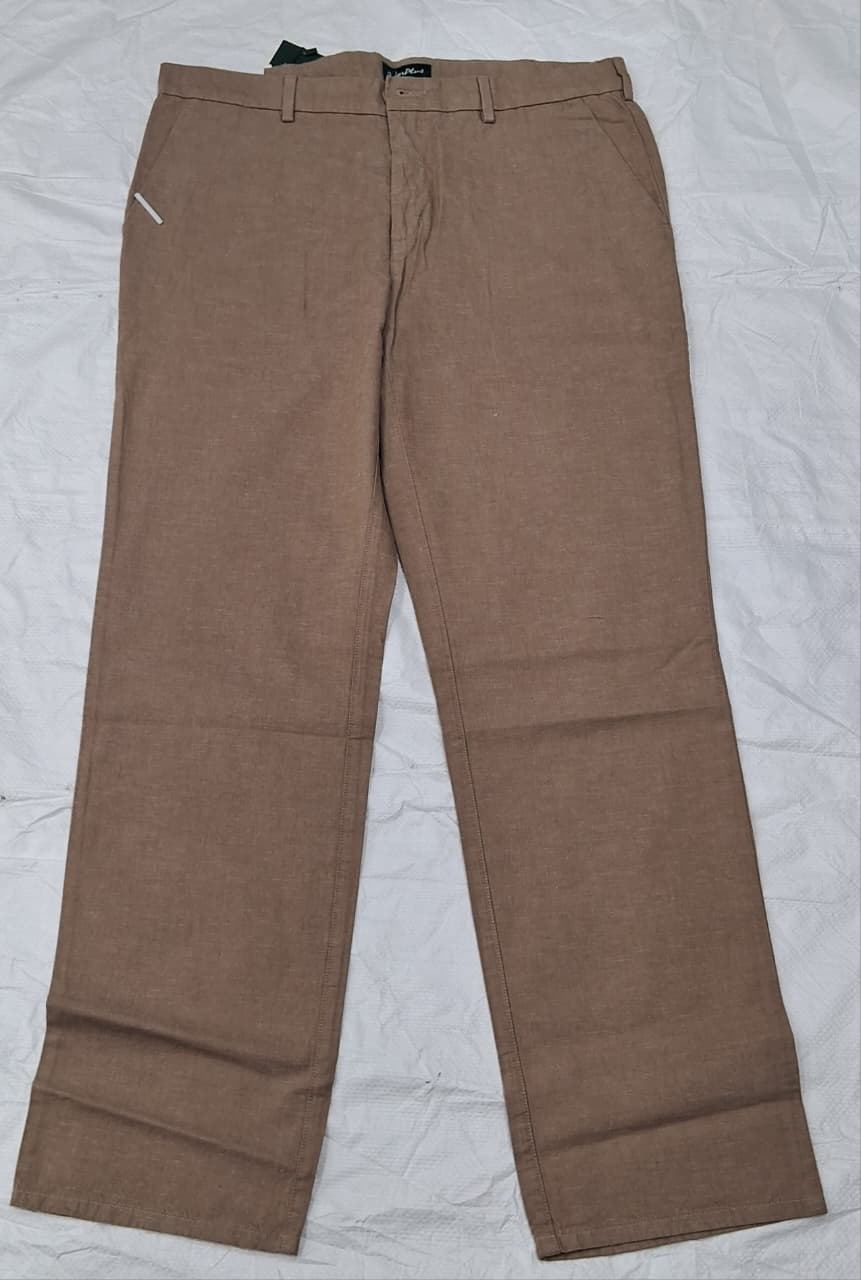
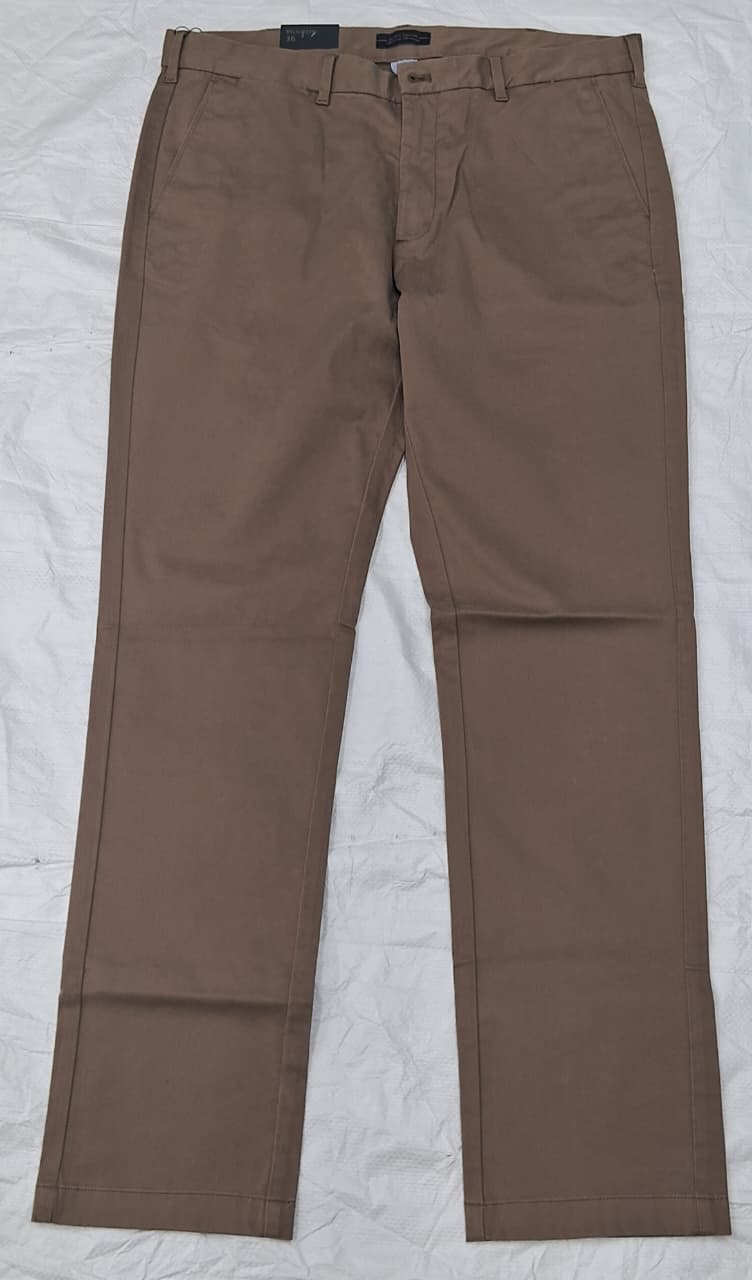
Brown men's trousers laid flat showing waistband, belt loops and fly
Fig. D.01 — Brown trousers, frontWaistband, belt loops, fly
Detail 01 / 10

Waistband

The waistband is a separate band of cloth sewn to the top of the trouser. It carries the weight of the garment, holds the shirt in place and gives the top edge its shape.

Structure
Most waistbands are stiffened with interfacing — a firmer inner layer, fused or sewn in — so the band stays flat and resists rolling over when you sit.
Inside
In many tailored trousers the inside of the band is finished with a waistband lining, often called a curtain: a strip of lining cloth that hangs below the band and covers the raw seams. Some include a grip tape to help keep a shirt tucked.
Split back
A traditional tailoring feature: the waistband is made in two halves joined by a seam at the centre back, continuing the seat seam. That seam is what makes the waist adjustable later.
Look for
A band that lies flat with no ripples, an even width all the way round, and straight, even stitching along its lower edge.
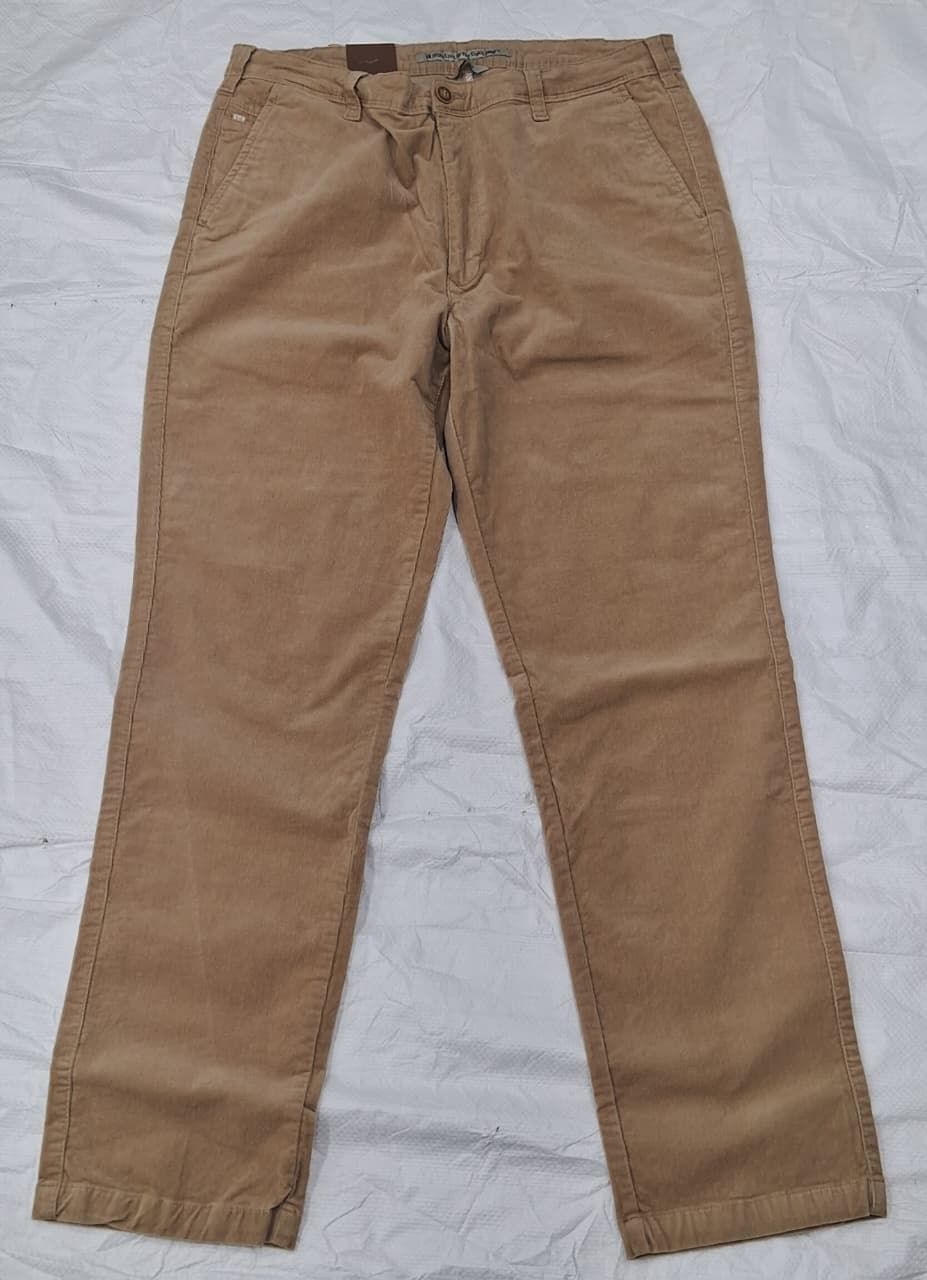
Khaki men's trousers laid flat with the waist button and fly visible
Fig. D.02 — Khaki trousers, frontWaist button and fly
Detail 02 / 10

Front closure

The fly and its fastening sit at the visual centre of the body. Whatever the closure, its first job is to lie completely flat.

Zip fly
The most common closure on modern formal trousers. The zip sits behind a fly shield and is covered by a stitched placket — the curved line visible on the front.
Button fly
An older closure still found in some traditionally tailored trousers: flatter than a zip, slower to fasten.
Extended tab
The waistband continues past the fly as a tab, fastened by a button, a hook or both. It gives the front a cleaner, more tailored look.
Hook-and-bar
A flat metal hook on the tab engages a bar on the opposite side. It spreads tension along the band and keeps the front flat; it is often paired with an inner button.
Look for
A fly that lies flat without puckering, a fully concealed zip, and a firmly sewn button with a neat, close buttonhole.
DWG D.03
Pleat forms, front panelDiagram · not to scale
Detail 03 / 10

Pleats

Pleats are folds of cloth stitched into the waistband at the front and released below it, adding room over the hips and thighs. Their popularity has risen and fallen with fashion through the last century.

Flat front
No pleats. A smooth, clean panel and the dominant modern choice for office formal pants.
Single
One fold on each side: a little extra ease without much visible volume.
Double
Two folds on each side: more room and a softer, fuller drape. Traditionally paired with a wider leg.
Direction
Forward pleats fold towards the fly; reverse pleats fold towards the pockets. Both have long histories, and preference varies between tailoring traditions.
Look for
Pleats that stay closed when you stand and open only when you sit or move. Pleats pulled open while standing mean the trouser is tight at the hip.

How the waist sits also decides how a trouser fits — the fit engineering guide explains rise, seat and waist position in detail.

§ 04Pockets & belt · D.04–05

Pockets and the waist line.

Pockets and belt loops are where function and appearance collide most visibly. Both must work, and both must lie flat.

Tan men's trousers laid flat with slant side pocket and waistband visible
Fig. D.04 — Tan trousers, frontSlant pocket and waistband
Detail 04 / 10

Pockets

Pockets are cut into the structure of the trouser, so their shape and position change the line of the hip — and how well they lie flat is an honest test of fit.

Slant
An angled opening running from the waistband down to the side seam. Easy to reach and the most common front pocket on formal and chino trousers.
On-seam
A side-seam pocket whose opening is hidden in the side seam itself. It gives the cleanest, most formal hip line.
Jetted
Back pockets cut as a slit and finished with narrow strips of cloth (jets), often closed with a button. Flat and tailored, unlike a patch pocket.
Coin
A small pocket at the front waistband found on some trousers, originally for a watch or coins.
Look for
Openings that lie closed when standing, reinforcement at the ends of each opening, and pocket bags of smooth, sturdy cloth.
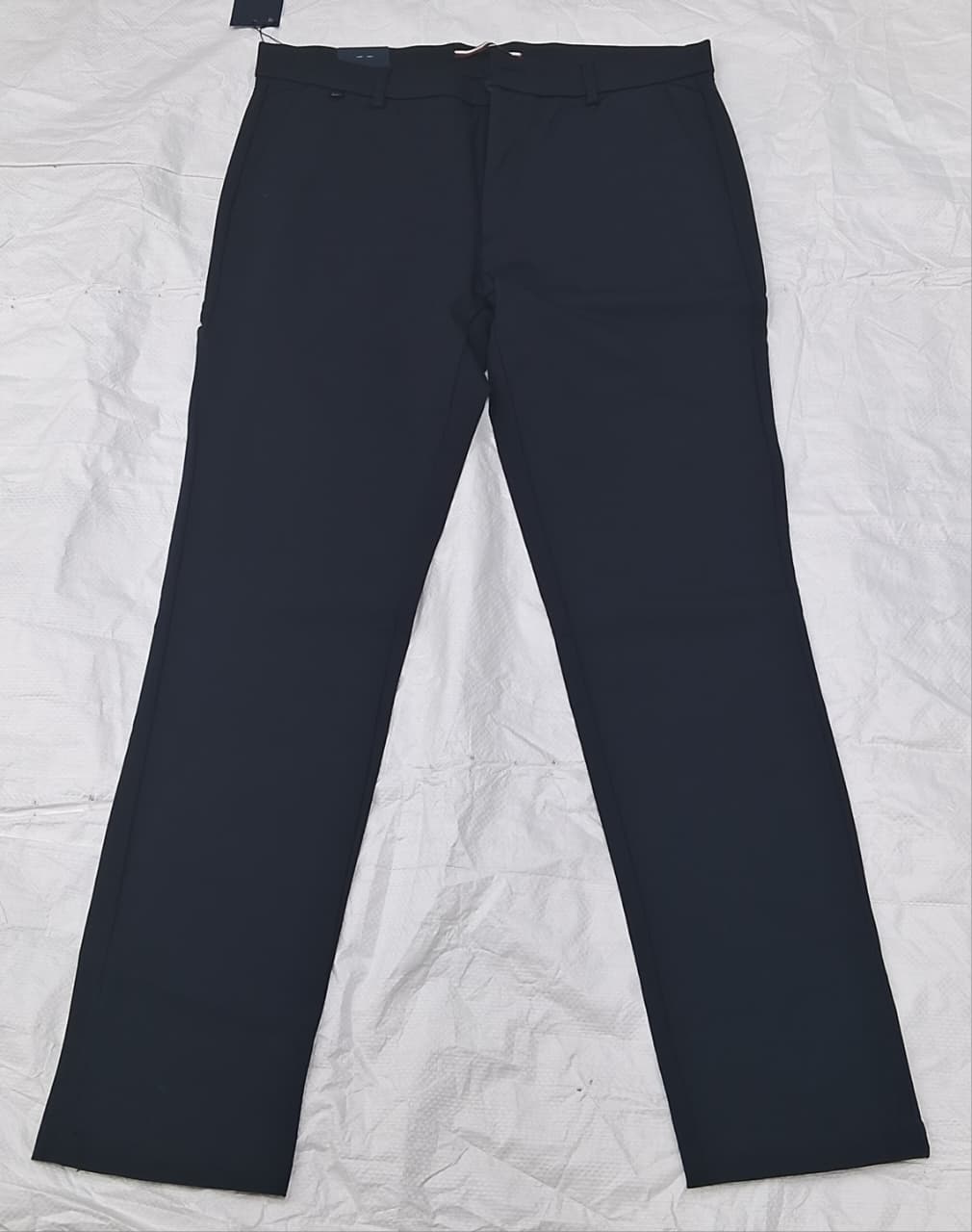
Navy men's trousers laid flat showing the front closure and side pockets
Fig. D.05 — Navy trousers, frontWaistband, front and pockets
Detail 05 / 10

Belt loops & side adjusters

There are two traditional ways of holding trousers at the waist: a belt through loops, or adjusters built into the waistband itself.

Belt loops
Strips of cloth stitched to the waistband and spaced around it, with loops at the back to keep the belt level. The everyday choice for office wear for men.
Side adjusters
Buckled straps or buttoned tabs at the sides of the waistband that tighten the waist without a belt. Associated with tailored suit trousers.
Appearance
A belt adds a horizontal line at the waist. Side adjusters leave the line from jacket to trouser uninterrupted, which reads cleaner and more formal.
Look for
Loops securely stitched at both ends, set level with each other, and wide enough for the belts you wear.
§ 05The leg line · D.06–08

Crease, seam and hem.

Three details shape the long vertical line of the leg: the pressed crease down its centre, the seams along its edges and the hem at its end.

DWG D.06
Front crease and leg sectionDiagram · not to scale
Detail 06 / 10

Creases

The pressed crease down the centre of each leg became a standard feature of men's trousers around the turn of the twentieth century. It draws a vertical line that lengthens the leg and signals that a trouser has been cared for.

Placement
The front crease runs from the waistband or pleat down through the centre of the knee to the middle of the shoe; the back crease mirrors it.
How it is set
The leg is laid flat with the inseam and outseam aligned, then pressed with heat, steam and pressure. Many makers set the crease permanently during finishing so it survives wear.
Maintaining it
Hang trousers by the hem or folded along the crease, re-press along the existing line, and use a pressing cloth to avoid shine on darker cloth.
Look for
A crease that is straight, central and symmetrical on both legs. A crease that wanders or twists is a warning sign about the cut or the pressing.
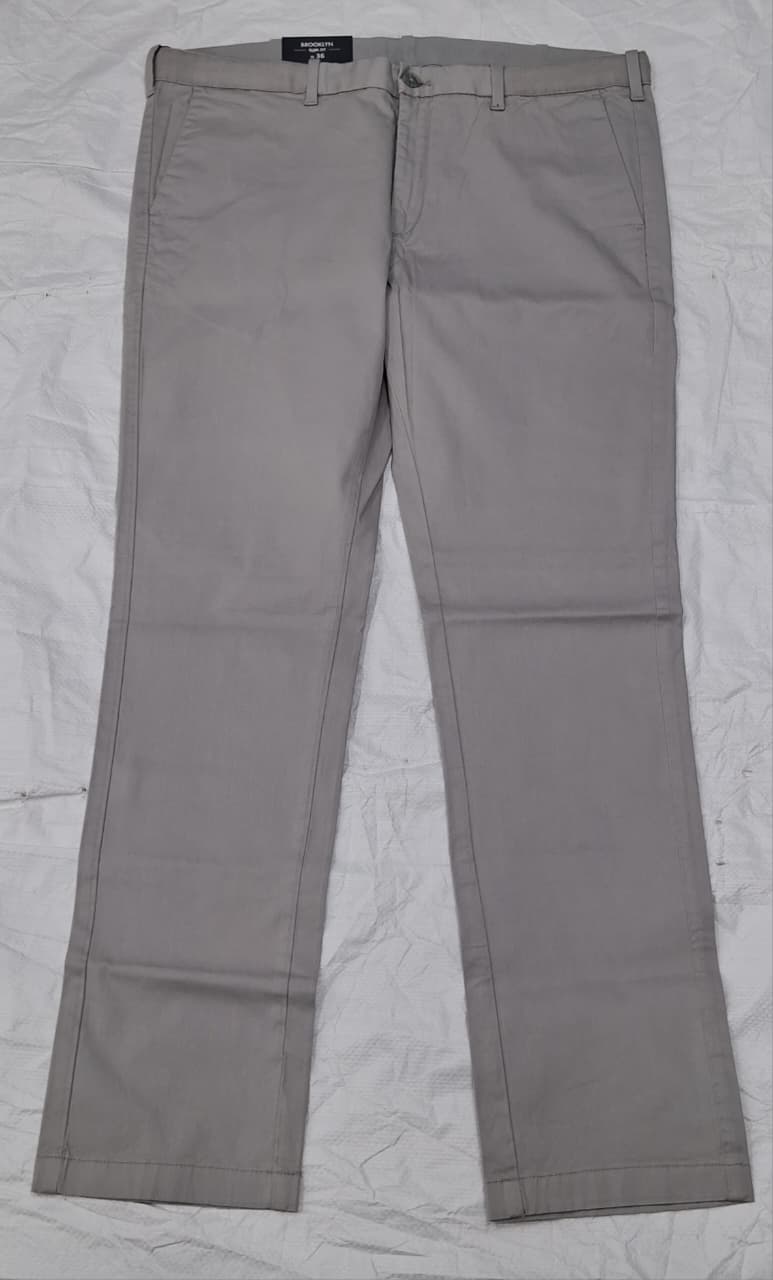
Light grey men's trousers laid flat showing side seams and hems
Fig. D.07 — Light grey trousers, frontSide seams and hems
Detail 07 / 10

Seams

Seams decide whether the outline of a trouser is clean and whether the trouser can be adjusted over its life.

Side seam
The outer seam joining front and back panels — the outline of the leg seen from the front. It should run straight, without twisting or pulling.
Inseam
The inner leg seam from crotch to hem. It takes strain when you walk, so it needs even, secure stitching.
Seat seam
The curved seam at the centre back running up into the waistband. On traditionally tailored trousers it often carries a generous allowance.
Allowances
In tailored trousers, extra cloth is commonly left inside the seat and waist seams so the trousers can later be let out or taken in. More casual construction often trims allowances narrow.
Look for
Flat seams with no puckering, straight lines from hip to hem and stitching that is even in length.
DWG D.08
Hem finishes, outer viewDiagram · not to scale
Detail 08 / 10

Hems

The hem ends the leg line. Its finish changes how the trouser hangs and how it meets the shoe.

Plain
A clean folded hem stitched invisibly inside. The most formal and the most versatile finish.
Turn-up
Also called a cuff: the hem folded outward into a band. Associated with the Edwardian era, it adds weight at the ankle and a more traditional character; usually seen on wider legs.
Slanted
An angled hem, slightly longer at the back than the front, so the trouser covers more of the heel while keeping a small break at the front.
Heel guard
A strip of tape sewn inside the back of the hem where it rubs against the shoe, protecting the cloth from wear.
Look for
Even length on both legs, no visible stitching on the outside of a plain hem, and a fold that hangs straight.

How sharply a crease holds and how a hem hangs depend heavily on the cloth — see the material library for how different formal trouser fabrics behave.

§ 06Stitch & finish · D.09–10

Stitching and finishing.

The final two details are the least visible and the most revealing. Turn a pair of trousers inside out and they tell you how carefully it was made.

DWG D.09
Stitch types, magnifiedDiagram · not to scale
Detail 09 / 10

Stitching

Stitching is invisible when it is good. When it is poor — loose, uneven or puckered — it is often the first thing to fail.

Lockstitch
Two threads, one from above and one from below, interlocking in the cloth. The standard stitch for the main seams of trousers: strong and flat.
Blind hem
A stitch that catches only a few threads of the outer cloth, so it is almost invisible from the outside. Used on plain hems.
Bar tacks
Short, dense zigzag stitches at points of stress: the ends of pocket openings, the base of the fly and the belt loops.
Look for
Even stitch length, straight lines, no loose ends, and reinforcement where the trouser is pulled hardest.
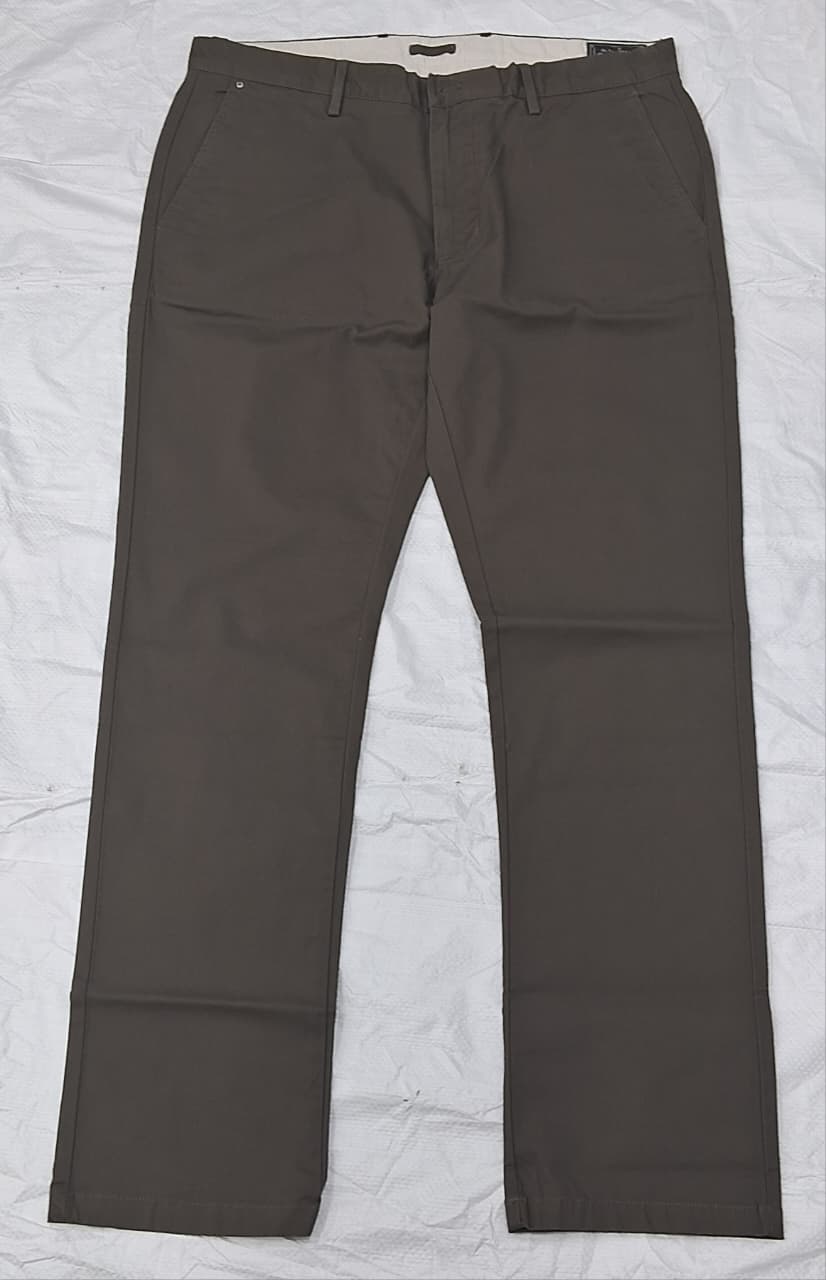
Olive brown men's trousers laid flat with the inner waistband visible
Fig. D.10 — Olive brown trousers, frontLight inside of the waistband at the top
Detail 10 / 10

Finishing

Finishing covers everything done after the main seams are sewn: neatening raw edges inside, lining, and the final pressing that sets the trouser's shape.

Seam finishes
Raw edges inside are neatened to stop fraying — most often by overlocking, a looped stitch that wraps the edge, or by binding the edge in a strip of tape for a cleaner finish.
Linings
Some tailored trousers are lined at the front to the knee. The lining helps the cloth slide over the leg, reduces creasing and protects finer wool.
Pressing
Pressing during and after making sets seams, creases and the shape of the waistband. Good final pressing is what makes new trousers look crisp.
Look for
Clean, neatened edges inside, no loose threads and a finish that looks as considered inside as out.
§ 07Inspection sheet

Judging a pair in two minutes.

You do not need to be a tailor to read construction. Hold the trousers up to the light, look closely at the points below and turn them inside out. Quality shows in consistency: details that are as neat where nobody looks as where everybody does.

C.01Waist

  • The waistband lies flat, with no ripples or twisting
  • Belt loops are level and stitched firmly at both ends
  • The button or hook sits squarely and fastens without strain

C.02Front

  • The fly lies flat and the zip is fully concealed
  • Pleats, if any, hang closed
  • Pocket openings lie flat and are reinforced at their ends

C.03Leg

  • Creases are straight, central and match on both legs
  • Side seams and inseams run straight without puckering
  • Both legs hang the same length

C.04Hem

  • Plain hems show no stitching on the outside
  • Turn-ups, if present, are even in depth
  • The back of the hem is clean — a heel guard is a bonus

C.05Inside

  • Raw edges are overlocked or bound
  • No loose threads, skipped stitches or uneven stitch length
  • The inside of the waistband is neatly finished

Care that protects the construction

Construction details last as long as they are looked after. These habits are general — always follow the care label on the garment itself.

Hang
Hang trousers by the hem or folded along the crease on a wide hanger, so the crease and waistband keep their shape.
Rest
Rotate between pairs. A day off lets creasing from wear relax out of the cloth.
Press
Press along the existing crease with a pressing cloth; avoid pressing over pocket bags, which can leave imprints on the front.
Empty
Empty pockets before hanging. Weight in the pockets pulls the openings out of shape over time.
Clean
Brush or spot-clean between washes. Over-washing and hot drying wear fabric, soften waistbands and fade creases faster.
Note

This is general education about how men's formal trousers are commonly constructed. It is not a specification of the trousers photographed on this page, and it does not describe any service. For an overview of the trouser forms themselves, see the Trouser Collection; to visit Options Mall in Juhu, Vile Parle West, see the contact sheet.

05Material LibraryNext sheet →