Menswear / Formal Trousers The Trouser Engineering Lab Sheet 02 / 10
Options Mall logo Options Mallformalpantsnearme.com

Sheet 02Classification ledger · 8 entries

Men's Formal Trousers, classified.

Eight formal trouser styles, each entered in the ledger with its identifier, its defining measurements, the proportions it tends to suit and the way it is styled. Read it as a field guide to men's formal trousers: classic formal trousers, slim fit formal pants, regular fit formal pants and the rest, set side by side so the differences become visible.

Schematic of one trouser leg comparing three leg lines: slim, regular and straight Hip Knee Hem
Slim Regular Straight Fig. 00 — One leg, front view, schematic
  1. TC-01Classic
  2. TC-02Slim
  3. TC-03Regular
  4. TC-04Straight
  5. TC-05Pleated
  6. TC-06Flat-front
  7. TC-07Contemporary
  8. TC-08Office

§ 02How the ledger is organised

Three axes describe any pair of formal trousers.

  1. A

    Leg line

    How width changes from thigh to hem. Slim tapers, regular steps down gently, straight holds its width below the knee. Entries TC-02, TC-03 and TC-04.

  2. B

    Front

    What happens below the waistband: pleats that release cloth, or a smooth flat front. Entries TC-05 and TC-06.

  3. C

    Character

    The design intent: classic and ceremonial, contemporary and expressive, or practical office wear. Entries TC-01, TC-07 and TC-08.

The axes overlap. A single pair can be slim, flat-front and office-ready all at once, so each entry ends with cross-references to its neighbours. For the measurements behind the terms (rise, seat, thigh, knee and opening) see the men's trouser fit guide.

§ 03Entries TC-01 to TC-08

The ledger of formal trouser styles.

Plates are reference photographs chosen to illustrate each category. Captions describe only what is visible. They are not product listings and say nothing about availability.

TC-01/CLASSIC

Classic Formal Trousers
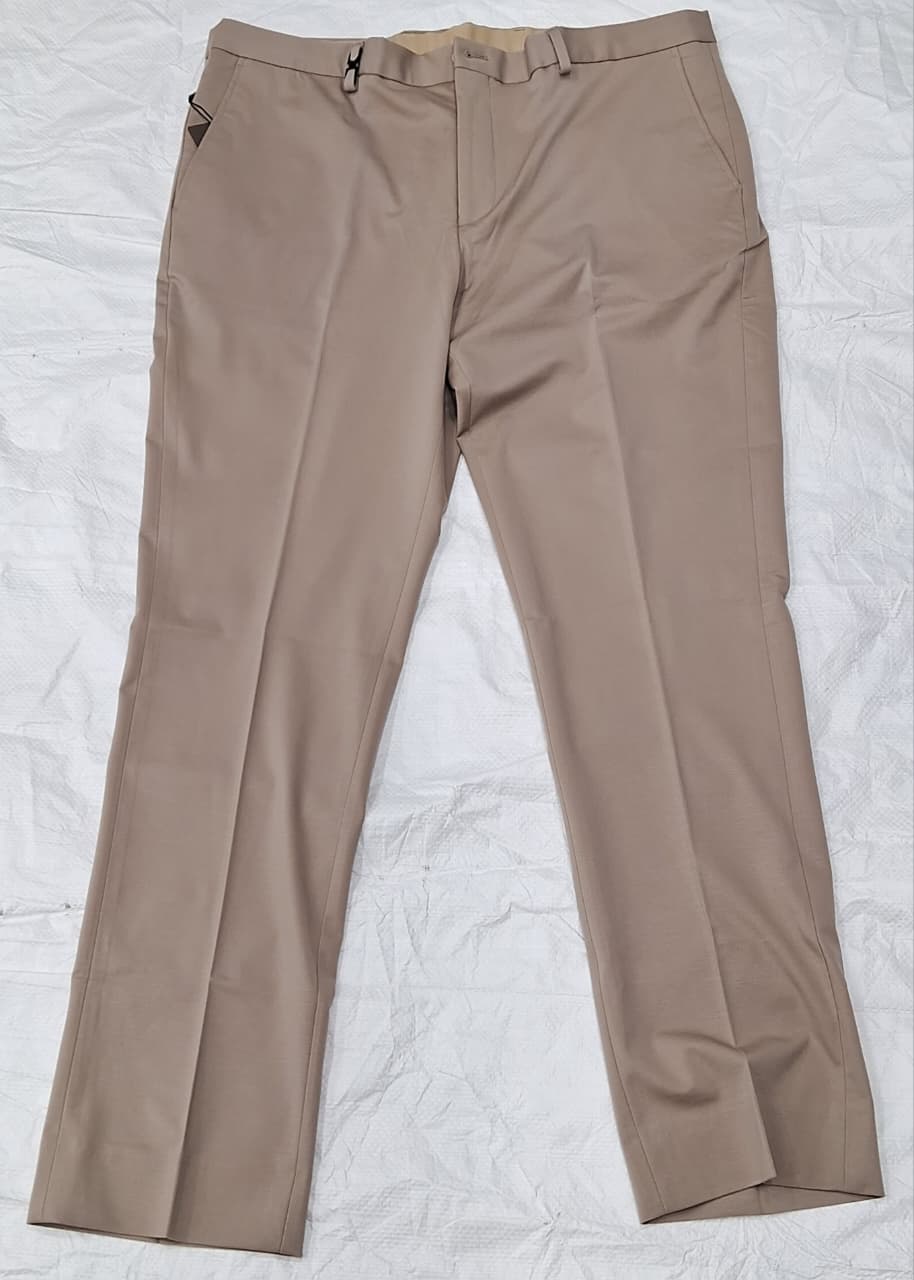
Taupe classic men's formal trousers laid flat with pressed front creases
Plate TC-01 — Taupe trousers, laid flatPressed front creases visible

The classic formal trouser is the reference form against which every other form on this sheet is measured. It sits at or close to the natural waist, allows clean room through the seat and thigh, and falls in a near-straight line to a hem that meets the shoe. A pressed centre crease runs the full length of each leg. The form descends from the long trousers that replaced breeches in the early nineteenth century, and its pressed, creased shape had become familiar by the turn of the twentieth.

Spec sheetTC-01

Leg line
schematic
Rise
Mid to high; at or near the natural waist
Seat
Clean, with modest ease
Thigh
Moderate room
Knee
Slight reduction from the thigh
Opening
Medium; covers the top of the shoe
Front
Flat or single pleat, pressed crease
Hem
Plain, slight to half break; turn-up optional
Formality
5 / 5

Visual character

Composed and quiet. The long, uninterrupted crease draws the eye vertically, so the leg looks longer and the outfit looks finished without any single detail asking for attention.

Tends to flatter

Most builds, because it neither clings nor billows. The higher rise helps longer torsos and keeps a shirt tucked through a long day.

Styling applications

Shirts
White, pale blue and fine stripes in poplin or twill
Jackets
Matching suit jackets; navy or charcoal structured blazers
Shoes
Oxfords and plain Derbys in black or dark brown, belt matched to the shoe
Occasions
Board meetings, interviews, ceremonies, formal events

Wardrobe roleThe foundation. If a wardrobe holds a single pair of formal trousers, it should be this form in a dark neutral.

Compare with
  • TC-04 Straight fit — shares the column-like leg; classic is defined by its rise and crease, not by leg width alone.
  • TC-08 Office — relaxes the rise and puts easy care ahead of ceremony.
TC-02/SLIM

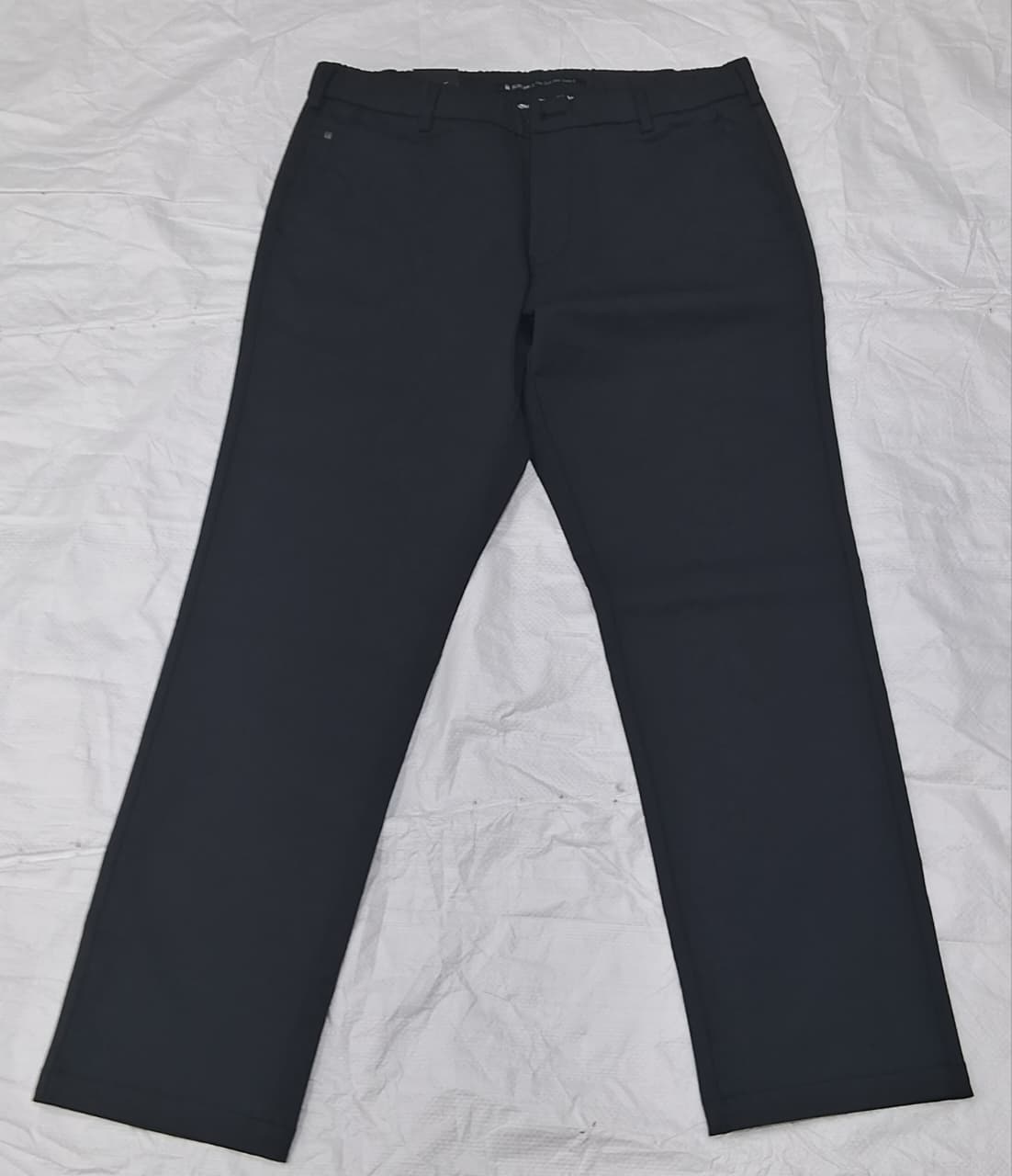
Slim-Fit Formal Trousers

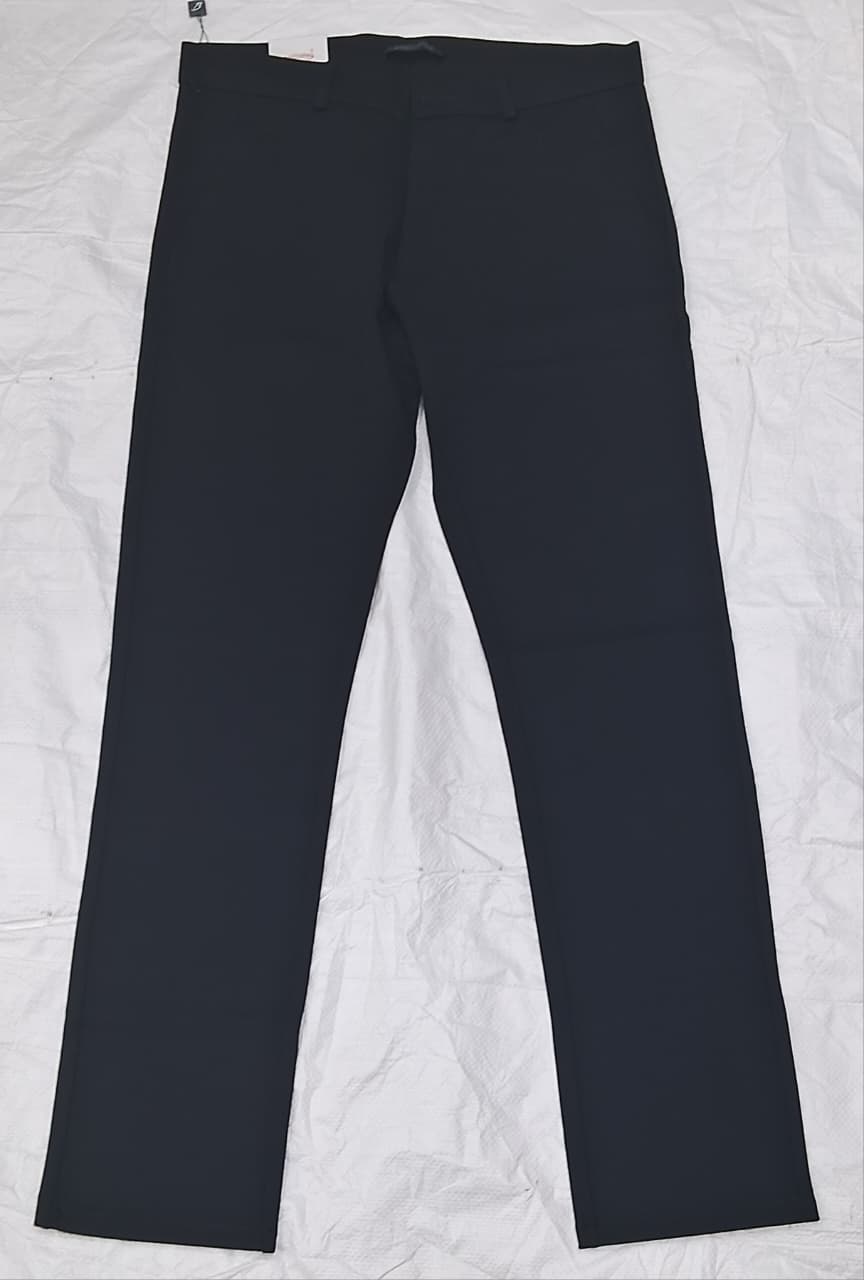
Black men's trousers with a tapered leg laid flat
Plate TC-02 — Black trousers, laid flatFull length

Slim-fit formal pants follow the leg more closely from hip to ankle. Room is reduced through the seat and thigh, and the leg tapers from the knee to a narrower opening. The rise is usually mid to low-mid, so the waistband sits a little below the natural waist. As menswear moved towards shorter jackets and closer cuts, this became the default modern office silhouette.

Spec sheetTC-02

Leg line
schematic
Rise
Mid to low-mid
Seat
Close, minimal ease
Thigh
Close; should skim, never grip
Knee
Noticeably narrower than the thigh
Opening
Narrow; shows more of the shoe
Front
Almost always flat
Hem
Plain; little or no break
Formality
3 / 5

Visual character

Sharp, lean and current. The taper creates a clear V from hip to ankle and puts visual emphasis on the shoe.

Tends to flatter

Slim and average builds and shorter frames, where a clean line avoids surplus cloth. Muscular thighs or a fuller seat usually need a slim-tapered cut with more room above the knee rather than a close one.

Styling applications

Shirts
Fitted shirts in solids and fine checks, tucked cleanly
Jackets
Shorter, closer-cut blazers; unstructured jackets
Shoes
Sleek Oxfords, loafers, Chelsea boots; slim shoes suit a slim opening
Occasions
Contemporary offices, presentations, evening events

Wardrobe roleThe modern option. Sharp in the right setting, though less forgiving over a long day of sitting than a regular fit.

Compare with

TC-03/REGULAR

Regular-Fit Formal Trousers

Navy men's regular fit trousers laid flat at full length
Plate TC-03 — Navy trousers, laid flatFull length

Regular-fit formal pants sit in the middle of the fit range. They keep a comfortable allowance through the seat and thigh, step down gently through the knee and finish in a medium opening that sits easily over most shoes. The rise is mid, so the waistband lands between the hip bone and the natural waist.

Spec sheetTC-03

Leg line
schematic
Rise
Mid
Seat
Comfortable ease for sitting
Thigh
Moderate to generous
Knee
Gentle reduction
Opening
Medium
Front
Flat-front or single pleat
Hem
Plain; slight break
Formality
4 / 5

Visual character

Balanced and unremarkable in the best sense: the eye reads the whole outfit rather than the trousers.

Tends to flatter

The broadest range of builds. Average, athletic and fuller figures all benefit from the ease in the seat and thigh, and taller men find it keeps the leg in proportion with the torso.

Styling applications

Shirts
Everyday formal shirts in white, blue, stripes and checks
Jackets
Standard blazers, sports jackets, knitwear in cooler weather
Shoes
Derbys, Oxfords, loafers, monk straps
Occasions
Daily office wear, client visits, travel days

Wardrobe roleThe workhorse. Most office wardrobes are built on this form, worn five days a week.

Compare with

TC-04/STRAIGHT

Straight-Fit Formal Trousers

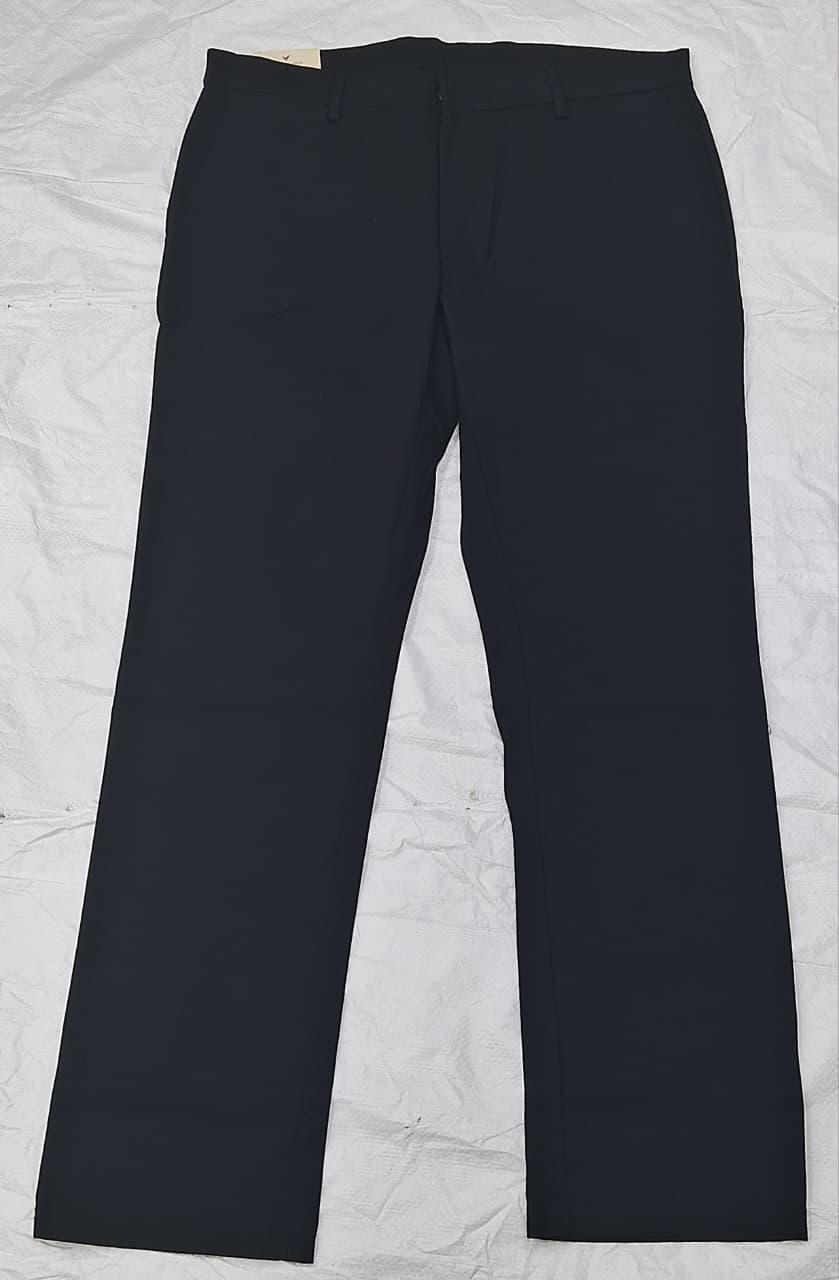
Navy men's straight fit trousers laid flat at full length
Plate TC-04 — Navy trousers, laid flatFull length

A straight-fit trouser keeps nearly the same width from the knee to the hem. Above the knee it may be cut close or easy; what defines it is the vertical line below. The leg hangs like a column, and the crease runs without interruption to the shoe.

Spec sheetTC-04

Leg line
schematic
Rise
Mid to high
Seat
Moderate ease
Thigh
Moderate
Knee
Close to the opening width
Opening
Medium to medium-wide, level with the knee
Front
Flat or pleated
Hem
Plain or turn-up; slight to half break
Formality
5 / 5

Visual character

Architectural and steady. Because the line does not taper, the trousers give the lower half a visual weight that balances the upper body.

Tends to flatter

Broader shoulders, a fuller chest and larger feet, and it lengthens the leg on taller frames. On a very slim frame it can look wide unless the opening is kept moderate.

Styling applications

Shirts
Crisp formal shirts with spread or semi-spread collars
Jackets
Structured and longer jackets, double-breasted cuts, suits
Shoes
Oxfords, brogues and substantial Derbys with some presence
Occasions
Business, formal events, traditional workplaces

Wardrobe roleThe anchor of a tailored wardrobe: the form that sits most naturally beneath a full-length jacket.

Compare with

TC-05/PLEATED

Pleated Formal Trousers

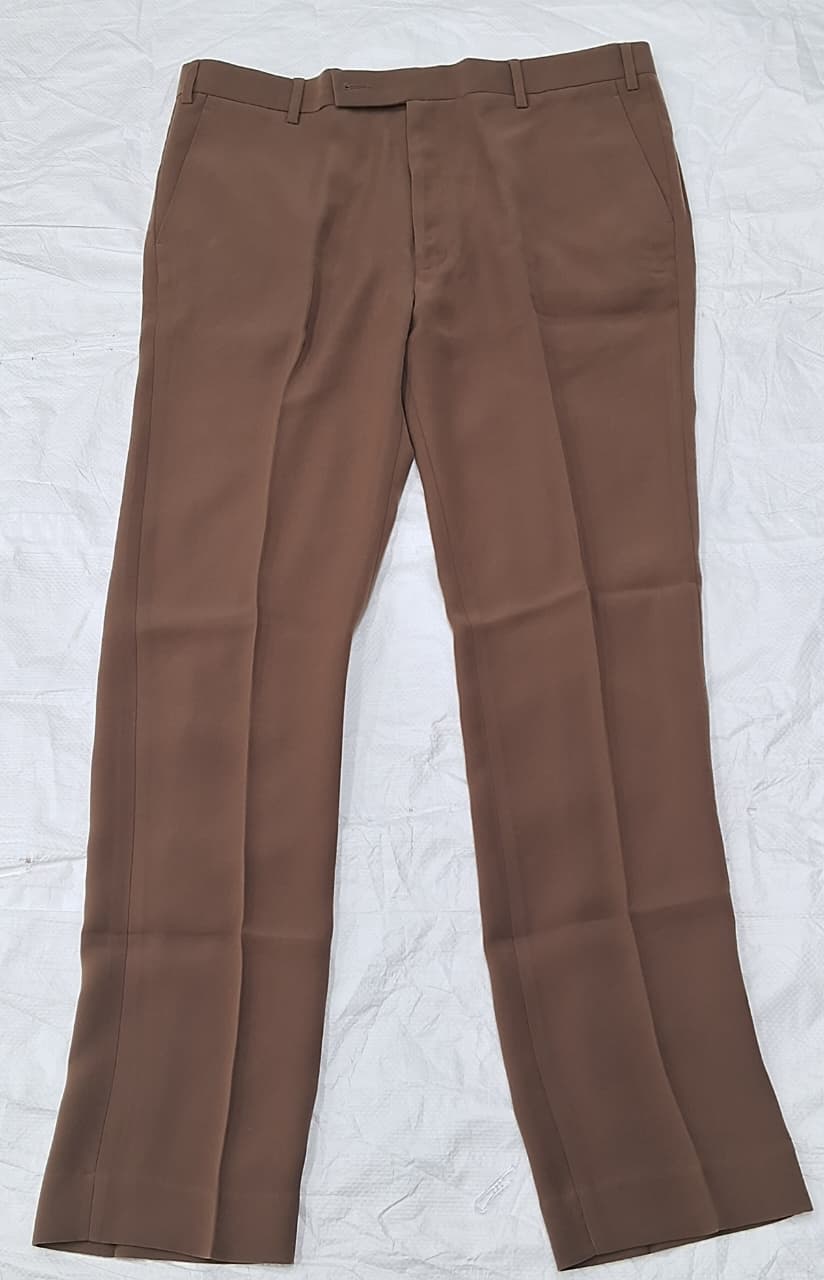
Copper brown men's formal trousers laid flat at full length
Plate TC-05 — Copper-brown trousers, laid flatReference silhouette; pleats not visible in this view

Pleated formal trousers carry one or two folds stitched into the waistband on each side of the fly. The pleats release extra cloth over the hips and upper thigh; it opens when you sit or stride and closes again when you stand. Forward pleats open towards the fly, reverse pleats towards the pockets. Pleats have risen and fallen with fashion over the past century and have returned in contemporary tailoring for their comfort and drape.

Spec sheetTC-05

Leg line
schematic
Rise
Mid to high; pleats need height to fall well
Seat
Generous
Thigh
Generous, released by the pleats
Knee
Reduces gradually
Opening
Medium, often tapered to balance a fuller top
Front
Single or double pleats, forward or reverse
Hem
Plain or turn-up; a turn-up adds weight that helps the drape
Formality
4 / 5

Visual character

Softer and more fluid. The cloth falls in long vertical folds, giving a relaxed elegance that still reads as tailored rather than casual.

Tends to flatter

Fuller thighs and seats, larger builds and anyone who sits for long periods; the higher rise also suits longer torsos. Very slim frames are better served by a single, shallow pleat.

Styling applications

Shirts
Tucked formal shirts, fine-gauge knitwear
Jackets
Double-breasted jackets, relaxed blazers, unstructured tailoring
Shoes
Loafers, Derbys, suede in warm tones
Occasions
Formal and heritage-inspired dressing, celebrations, creative workplaces

Wardrobe roleThe comfort-led formal option, and a deliberate style statement when worn with a matching jacket.

Compare with

TC-06/FLAT-FRONT

Flat-Front Formal Trousers

Black men's flat-front trousers laid flat
Plate TC-06 — Black trousers, laid flatPlain front panel

Flat-front trousers have no pleats: the front panel runs smooth from the waistband to the crease. Room comes from the cut rather than from folds, so the fit through the hip has to be right. Too tight and the side pockets flare open; too loose and the front ripples. Flat-front describes the front only, so it combines with a slim, regular or straight leg.

Spec sheetTC-06

Leg line
schematic
Rise
Low-mid to mid
Seat
Clean and close
Thigh
Close to moderate
Knee
Follows the chosen leg line
Opening
Follows the chosen leg line
Front
Smooth, no pleats; pressed crease usual
Hem
Plain; little to slight break
Formality
4 / 5

Visual character

Clean, minimal and streamlined. Nothing interrupts the surface below the belt, so the trousers read as one smooth plane.

Tends to flatter

Slim and average builds, and shorter frames where an unbroken front keeps the line long. On fuller builds a flat front works well provided the hip is cut with enough room.

Styling applications

Shirts
Slim shirts, polos, fine-gauge knitwear
Jackets
Single-breasted blazers, shorter jackets
Shoes
Oxfords, loafers, minimal leather sneakers for smart-casual days
Occasions
Modern offices, business travel, evenings

Wardrobe roleThe default front for modern formal pants: easy to combine and easy to keep pressed.

Compare with

TC-07/CONTEMPORARY

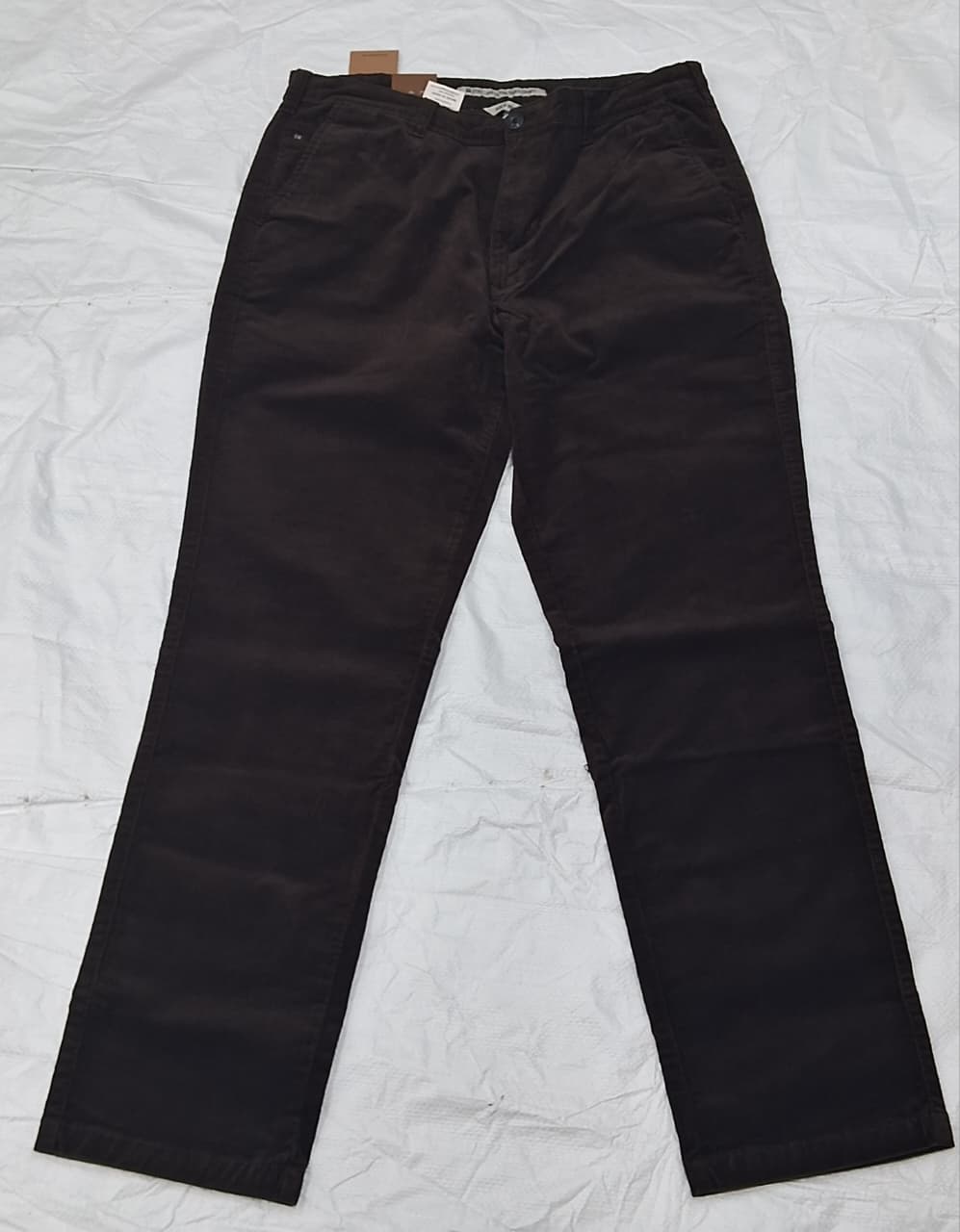
Contemporary Formal Pants

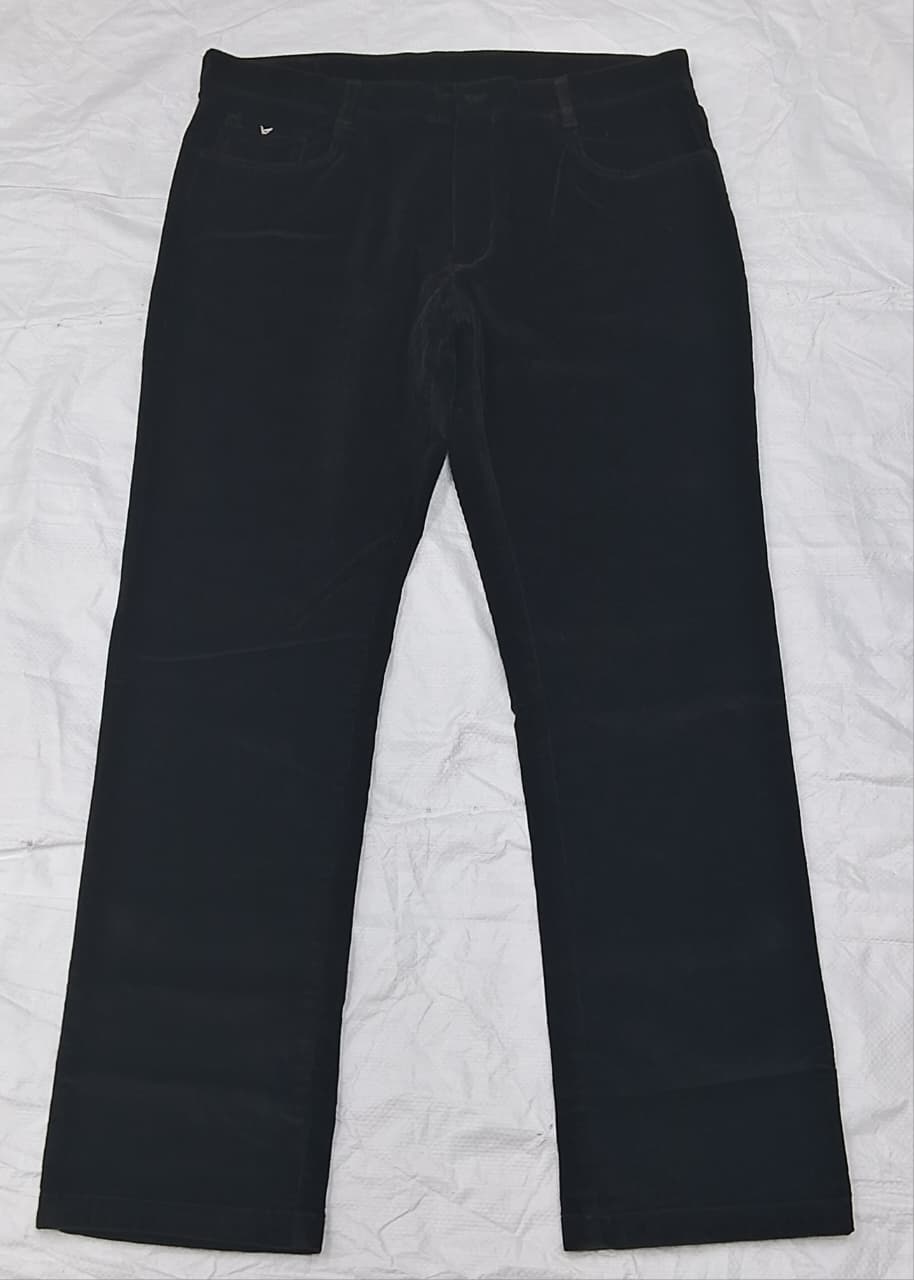
Dark brown men's contemporary trousers with a ribbed texture laid flat
Plate TC-07 — Dark brown trousers, laid flatRibbed surface texture

Contemporary formal pants keep the discipline of tailored construction but update the details: a textured or patterned cloth, a cropped or tapered leg, a reworked waistband, or a fabric borrowed from casual wear. They are best understood as formal trousers with one deliberate departure from convention.

Spec sheetTC-07

Leg line
schematic
Rise
Mid; sometimes higher on pleated versions
Seat
Varies with the cut
Thigh
Moderate
Knee
Often tapered
Opening
Narrow to medium; sometimes cropped
Front
Flat or modern pleat
Hem
Plain; often no break or a slight crop
Formality
3 / 5

Visual character

Expressive but still formal. Texture and proportion do the talking while colour usually stays quiet.

Tends to flatter

Depends on the cut: cropped, tapered versions suit average and slimmer builds; longer, pleated versions suit taller frames.

Styling applications

Shirts
Knit polos, band-collar shirts, textured Oxford-cloth shirts
Jackets
Unstructured blazers, overshirts, knitted jackets
Shoes
Loafers, suede Derbys, clean leather sneakers
Occasions
Creative workplaces, smart social events, polished weekends

Wardrobe roleThe bridge between formal and smart-casual. Not a replacement for a classic pair, but a way to extend it.

Compare with

TC-08/OFFICE

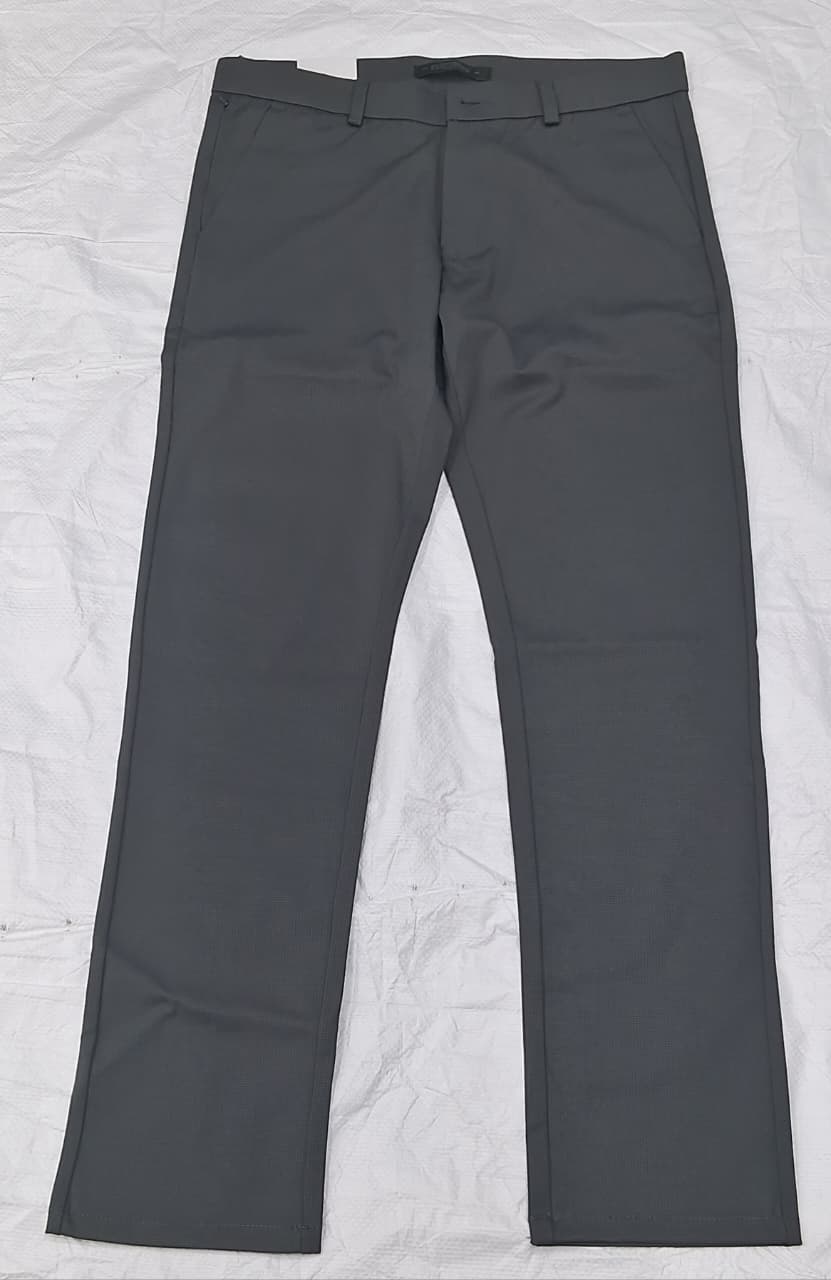
Office Trousers

Charcoal grey men's office trousers laid flat
Plate TC-08 — Charcoal grey trousers, laid flatFull length

Office trousers are defined less by a single measurement than by the job they do: five days a week of sitting, commuting and standing. They usually take a regular or slim-regular leg, a mid rise, a flat front and a cloth chosen to hold a crease and recover from wear. This is the form most often meant by office formal pants.

Spec sheetTC-08

Leg line
schematic
Rise
Mid
Seat
Comfortable ease
Thigh
Moderate
Knee
Gentle taper
Opening
Medium to medium-narrow
Front
Usually flat, crease pressed
Hem
Plain; slight break
Formality
4 / 5

Visual character

Dependable and polished. Mid greys, charcoals and navies keep the look quiet, so the same trousers can be worn often without being noticed.

Tends to flatter

A wide range of builds, provided the waist and seat are right. The mid rise keeps a shirt tucked from the morning commute to the evening one.

Styling applications

Shirts
Formal shirts in white, blue, pink and checks; knitwear layered over
Jackets
Navy or grey blazers, or no jacket at all
Shoes
Derbys, Oxfords and loafers in black or brown
Occasions
The working week, commuting, business travel

Wardrobe roleThe core of office wear for men. These are the trousers worn most, and therefore the ones worth choosing most carefully.

Compare with

§ 04Comparison matrix

Eight forms, one table.

The ledger flattened into rows. Formality is an editorial guide to how dressed-up each form reads, not a measurement.

Comparison of eight men's formal trouser styles by leg line, front, rise, formality, best occasions and natural jacket
FormLeg lineFrontRiseFormalityBest occasionsNatural jacket
TC-01Classic Straight to gentle taperFlat or single pleatMid–high 5 of 5 Ceremonies, interviews, board meetingsSuit jacket, structured blazer
TC-02Slim Tapered, narrow hemFlatMid–low 3 of 5 Modern offices, eveningsShort, close-cut blazer
TC-03Regular Gentle step-downFlat or single pleatMid 4 of 5 Daily office, client visitsStandard blazer, knitwear
TC-04Straight Even below the kneeFlat or pleatedMid–high 5 of 5 Business, formal eventsLonger or double-breasted
TC-05Pleated Full top, taperingOne or two pleatsMid–high 4 of 5 Celebrations, heritage dressingDouble-breasted, relaxed
TC-06Flat-front Follows chosen legSmooth, no pleatsLow–mid 4 of 5 Modern office, travelSingle-breasted
TC-07Contemporary Tapered, often croppedFlat or modern pleatMid 3 of 5 Creative work, smart socialUnstructured, overshirt
TC-08Office Regular to slim-regularFlat, pressed creaseMid 4 of 5 The working weekNavy or grey blazer, optional

§ 05Decision guide

How to choose.

Five questions, asked in order. Each narrows the ledger; together they usually point to one or two forms worth trying first.

A regular fit that fits will always look better than a slim fit that doesn't.

  1. Q1

    What goes on top most days?

    A suit jacket or a long, structured blazer wants the column of a classic or straight leg beneath it. Shorter jackets, knitwear or a shirt alone sit better over a slim or regular line.

    ConsiderTC-01 ClassicTC-04 StraightTC-02 SlimTC-03 Regular

  2. Q2

    How much room do the seat and thigh need?

    Fuller thighs and seats are better served by ease than by a narrow cut that pulls into creases. A slim frame can carry a closer line without looking swamped.

    ConsiderTC-03 RegularTC-05 PleatedTC-02 SlimTC-06 Flat-front

  3. Q3

    How long is the day, and how much of it is seated?

    Long hours at a desk and a commute either side favour a mid rise, comfortable seat and a cloth that recovers well. Pleats add useful room when you sit.

    ConsiderTC-08 OfficeTC-03 RegularTC-05 Pleated

  4. Q4

    How formal is the setting?

    Ceremonies and formal business call for classic, straight or pleated trousers in a dark neutral. Creative workplaces and smart social plans open the door to contemporary forms and textured cloths.

    ConsiderTC-01 ClassicTC-04 StraightTC-07 Contemporary

  5. Q5

    Finally, pleats or a flat front?

    Choose pleats for ease and drape, a flat front for a clean, minimal surface. Either can sit on almost any leg line, so decide this last.

    ConsiderTC-05 PleatedTC-06 Flat-front

03Fit EngineeringNext sheet →