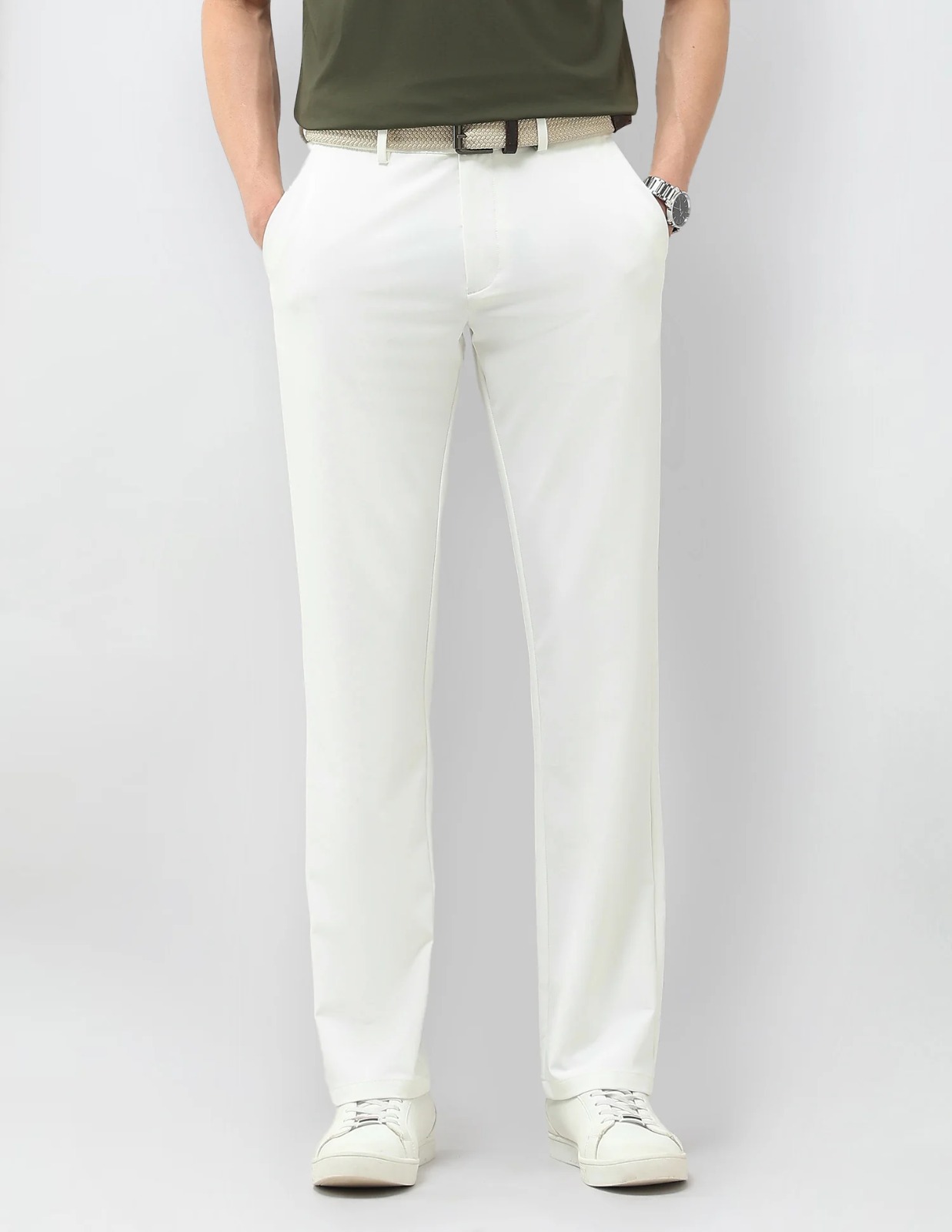
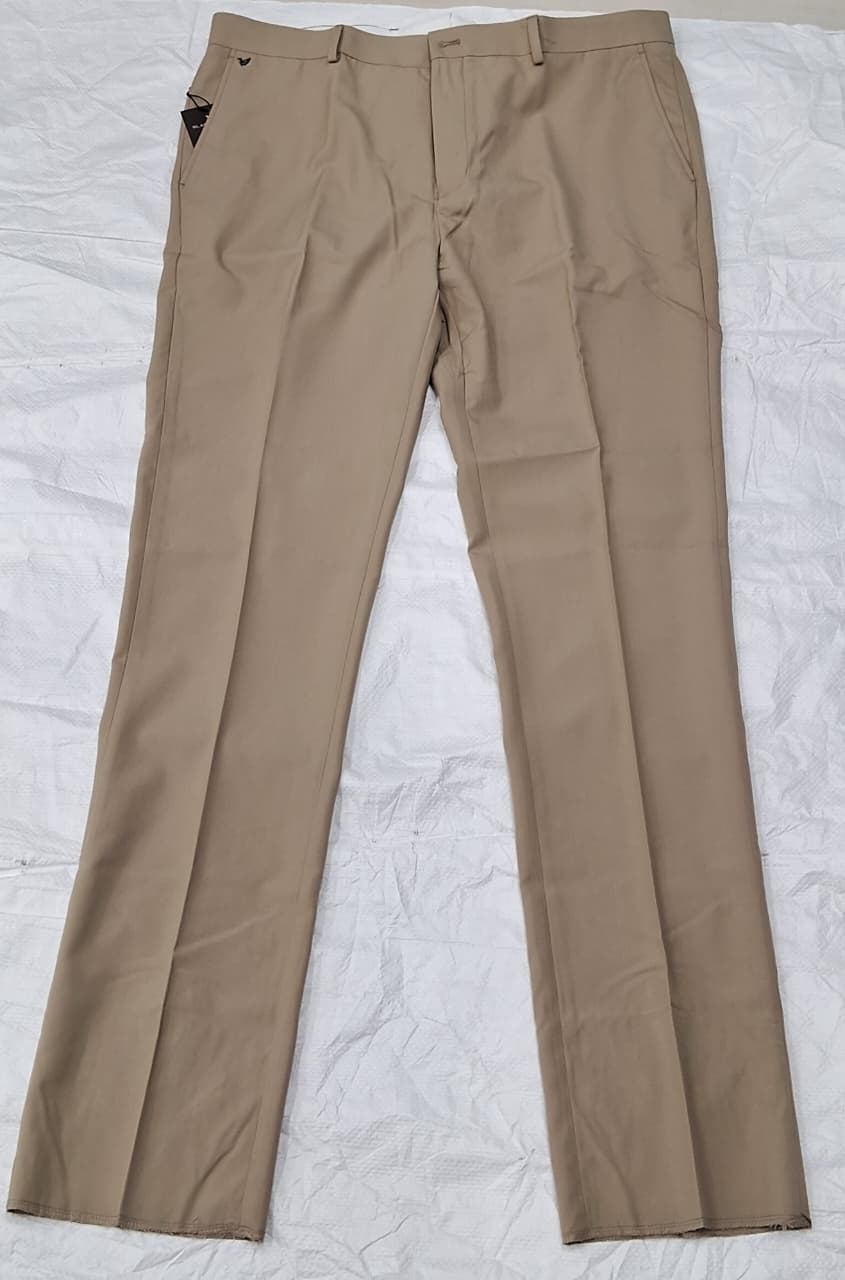
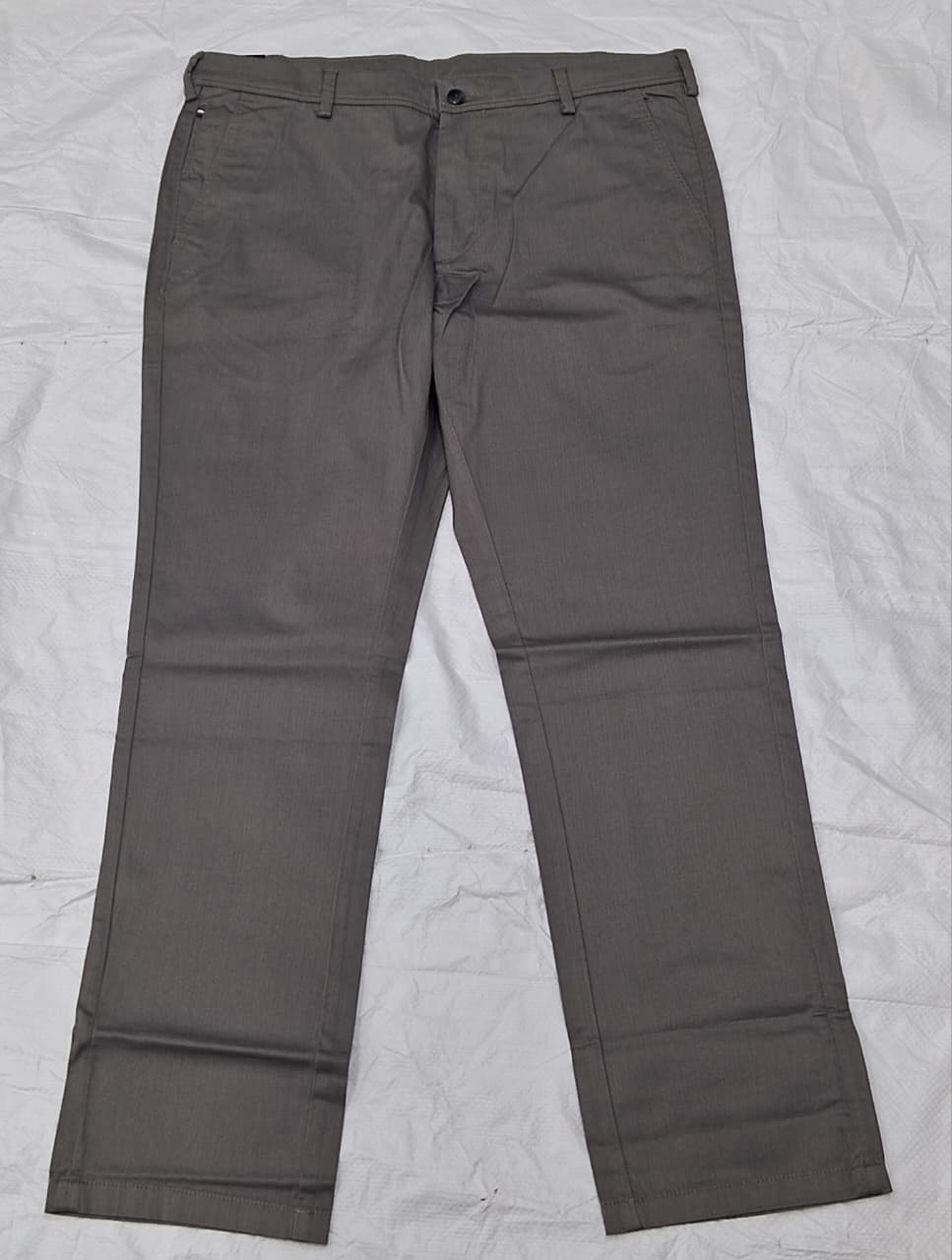
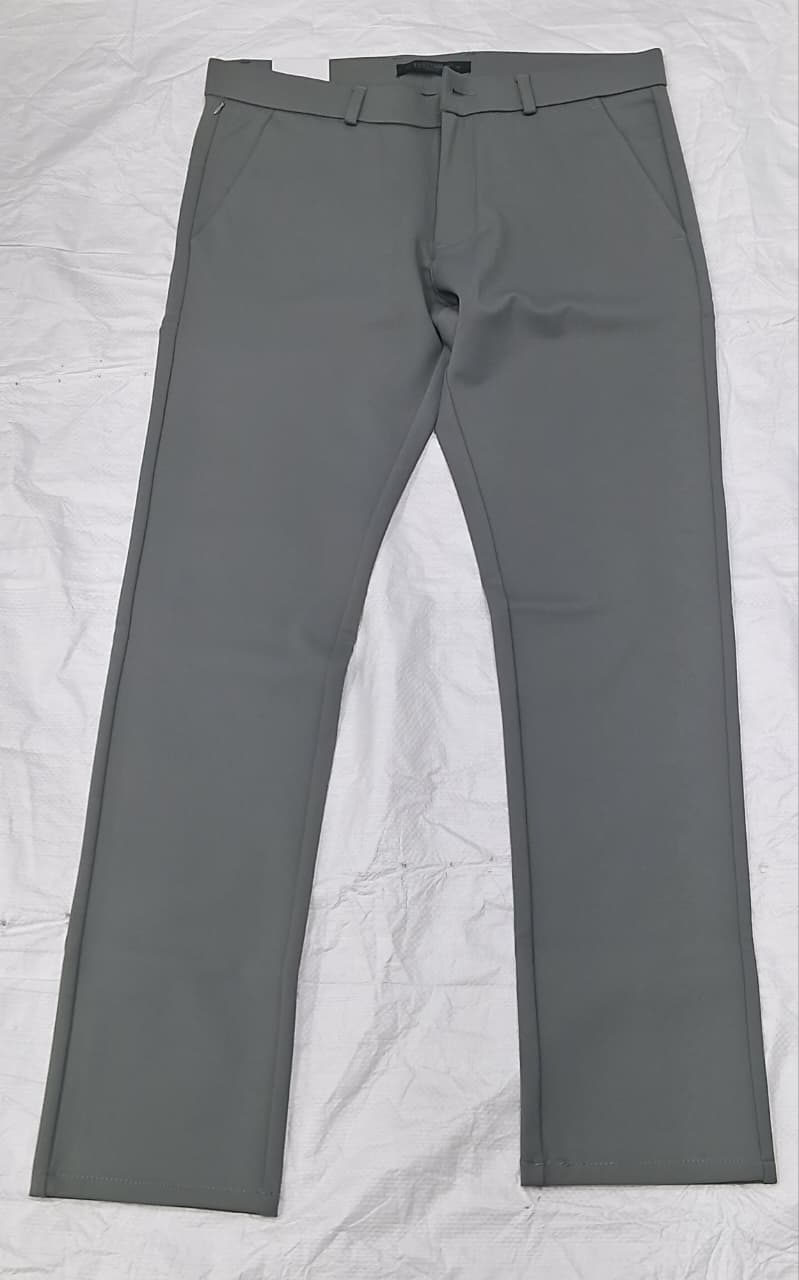
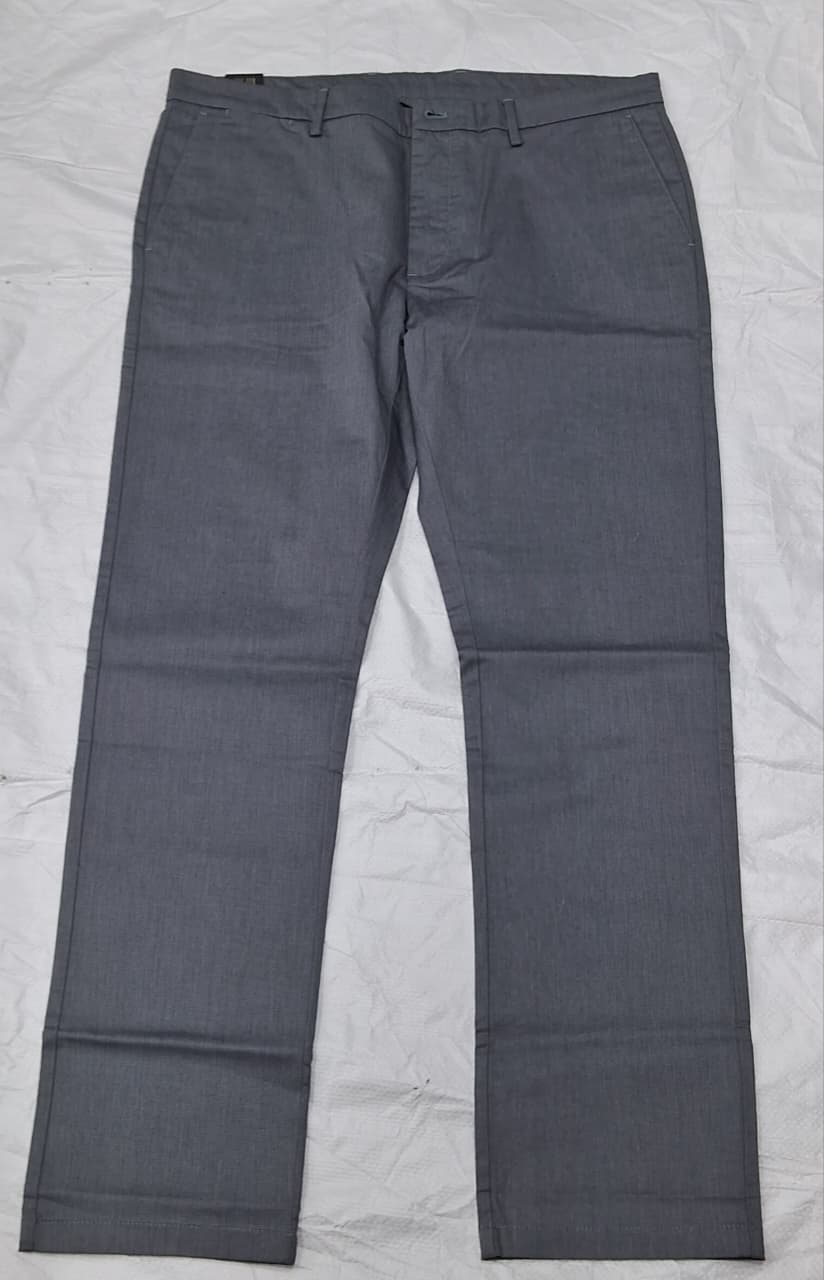
01
Dimension 01 / 09
Waist
The circumference at the top of the trouser, where the waistband sits. Everything below hangs from it: if the waist is wrong, the rise, the seat and the crease are all suspended from the wrong place.
Standing
The waistband lies flat all the way round and sits level from front to back. Turn sideways — it should not dip at the back or climb at the front. It should stay up without a belt doing the work.
Sitting
A little firmness is normal when seated; digging in, or the top edge folding over, is not. The fly and button should stay flat.
Walking
The trousers stay where you put them. If you find yourself hitching them up every few steps, the waist is too loose or sitting in the wrong place.
− Too tight / short
- Strain lines radiating from the button and fly
- The top of the waistband rolling over
- Side pockets pulled open
+ Too loose / long
- Gathered folds when a belt is tightened
- A gap at the centre back
- The trousers slipping down onto the hips
InteractionA loose waist slides down, which lowers the crotch, adds length and creates a break you never planned for. Waist and seat also have to suit each other: when the seat fits but the waist is large, the back of the waistband gapes.
02
Dimension 02 / 09
Rise
The distance from the crotch seam to the top of the waistband, at the front and the back. It decides where the trouser sits — nearer the natural waist with a higher rise, lower on the hips with a shorter one.
Standing
From the side, the waistband sits where the trouser was cut to sit and the crotch neither hangs low nor presses upward.
Sitting
The decisive test. A rise that is too short pulls the back of the waistband down and the front into the stomach, and the shirt starts to untuck.
Walking
Take a full stride. A crotch that hangs too low restricts the step; one that is too short presses with every step.
− Too tight / short
- Pressure at the crotch
- Curved "smile" creases at the front
- The back waistband dropping when seated
+ Too loose / long
- Fabric bunching below the fly
- A low crotch that shortens the visual leg
- Loose folds between the legs
InteractionA higher rise lengthens the leg line and keeps a shirt tucked; a lower rise reads more casual. Rise also moves the seat and thigh volume up or down, so decide where you prefer to wear the waist first, then judge the seat.
03
Dimension 03 / 09
Seat
The cloth over the hips and buttocks — the fullest part of the lower body. Seat room is what allows you to sit, bend and climb stairs without the trousers resisting.
Standing
Use a second mirror or a photograph to see the back. The cloth should follow the curve smoothly and fall straight from the fullest point towards the back of the thigh.
Sitting
No tension along the seat seam, and the back pockets should not be dragged open.
Walking
The back panel moves with you instead of visibly gripping and releasing on each step.
− Too tight / short
- Horizontal pull lines across the seat
- Back pockets pulled open
- Side seams dragged backwards
+ Too loose / long
- Slack cloth collecting below the seat
- Vertical folds at the back
- A drooping outline from the side
InteractionSeat and thigh usually travel together — a tight seat often comes with a tight upper thigh. Strain at the seat also drags the side seams and can pull the front crease off centre.
04
Dimension 04 / 09
Thigh
The width of the leg just below the crotch. It governs comfort when sitting and walking, and the visual weight of the upper leg.
Standing
The cloth hangs from the hip rather than clinging; the outline of the thigh muscle should not show.
Sitting
The thigh spreads when you sit. There should be room for that without the fabric drawing tight across the lap.
Walking
Take a high step, as if climbing stairs. If the cloth grips the thigh and does not release, the cut is too slim for you.
− Too tight / short
- Horizontal lines across the front of the thigh
- Side pockets flaring open
- Fabric riding up and sticking
+ Too loose / long
- Cloth flapping as you walk
- Ripples down the inseam
- A soft, undefined upper leg
InteractionThe thigh sets the starting width of the leg line, and the knee and leg opening have to step down from it in proportion. Muscular thighs often call for a straight or regular cut even on an otherwise slim frame.
05
Dimension 05 / 09
Knee
The width of the leg at knee level — the hinge between upper and lower leg, and the point that controls how sharply the leg tapers.
Standing
The crease passes straight over the knee and the fabric does not outline the kneecap.
Sitting
The knee bends furthest. The cloth should accommodate it without feeling restrictive or pulling the hem far up the shin.
Walking
Fabric swings clear of the knee rather than catching on it with each step.
− Too tight / short
- The kneecap visible through the cloth
- Fabric bagging at the knee after sitting
- The leg riding up when seated
+ Too loose / long
- The lower leg ballooning when the opening is narrow
- Fabric collapsing into folds at the shin
InteractionKnee width and leg opening define the taper together. A narrow knee also pulls the hem higher when you sit, so it affects how much sock and ankle show.
06
Dimension 06 / 09
Leg opening
The width of the hem at the bottom of each leg. It decides how the trouser meets the shoe and how the whole line ends.
Standing
From the front, the hem covers a good part of the shoe; from the side, check whether it sits cleanly against the heel.
Sitting
Narrow openings ride further up the leg, exposing more sock and ankle.
Walking
A very wide opening flaps; a very narrow one can catch on the back of the shoe and be pushed into folds.
− Too tight / short
- The hem catching on the heel
- Folds forming as the hem rests on the shoe
- Shoes looking bulky by comparison
+ Too loose / long
- The hem swallowing the shoe
- The back of the hem dragging on the ground
- A heavy, wide-based line
InteractionBalance the opening against the shoe: sleeker shoes suit narrower openings, heavier shoes need more width. The opening also shapes the break — a narrow hem lands on the shoe sooner and folds earlier.
07
Dimension 07 / 09
Length
How far the trouser reaches. It can only be judged on the body, standing, wearing the shoes you plan to wear with it — not read off a label.
Standing
At the front, the hem meets the top of the shoe. At the back, it reaches down towards where the heel meets the upper.
Sitting
Every trouser rises when you sit — that is normal. Check that the amount of sock showing is acceptable to you.
Walking
The hem should not drag on the ground at the back, nor flick up clear of the shoe with each step.
− Too tight / short
- The hem hovering above the shoe
- Sock visible while standing
- A cropped look you did not intend
+ Too loose / long
- Fabric stacking or puddling at the shoe
- The hem dragging and wearing at the heel
InteractionLength and leg opening together produce the break. Waist position changes length too: a trouser worn lower on the hips is effectively longer than the same trouser worn at the waist.
08
Dimension 08 / 09
Break
The fold that forms at the front of the trouser where the hem rests on the shoe. Usually described as no break, a slight break or a full break.
Standing
Look at the front of the leg just above the shoe: a single soft dent, one deeper fold, or a clean uninterrupted line.
Sitting
After you stand up, give the trousers a moment. The break should settle back into the same place rather than staying caught on the shoe.
Walking
A clean break keeps the crease running into the hem; excess fabric folds and unfolds with every step.
− Too tight / short
- No break with a short length: the hem bounces above the shoe
- The ankle shows when standing
+ Too loose / long
- Several stacked folds
- The crease broken at the shin
- The shoe disappearing under cloth
InteractionBreak is the product of length, leg opening and the shoe itself. A slight break is the most adaptable choice for office formal pants; no break suits slim, tapered legs; a fuller break belongs to wider, more traditional legs.
09
Dimension 09 / 09
Silhouette
The outline of the whole trouser, front and side — the sum of the eight dimensions before it. It is what people see first and what they remember.
Standing
Step back from the mirror until you can see your whole body. Look for one continuous line from hip to hem, from the front and from the side.
Sitting
Sitting changes the outline; check that nothing becomes extreme — no straining seat, no tight lap, no hem halfway up the shin.
Walking
After each step, the trousers should fall back into line rather than staying creased or stuck to the leg.
− Too tight / short
- The outline of the body showing through
- Pull lines appearing with every movement
+ Too loose / long
- A shapeless outline
- The leg line disappearing in cloth
InteractionSilhouette is where the trade-offs are made: thigh room against taper, length against opening, rise against waist position. The proportion notes further down this sheet show how slim, straight and regular cuts read on different builds.